
Anarthria
Definition and Clinical Features
Anarthria is the complete inability to articulate words. It represents the most severe end of the spectrum of motor speech disorders (cf. dysarthria, which refers to an impairment or partial loss of articulation). Unlike aphasia, which is a disorder of language processing and comprehension, anarthria is strictly a motor deficit; the patient's internal language and ability to understand spoken or written words typically remain intact.
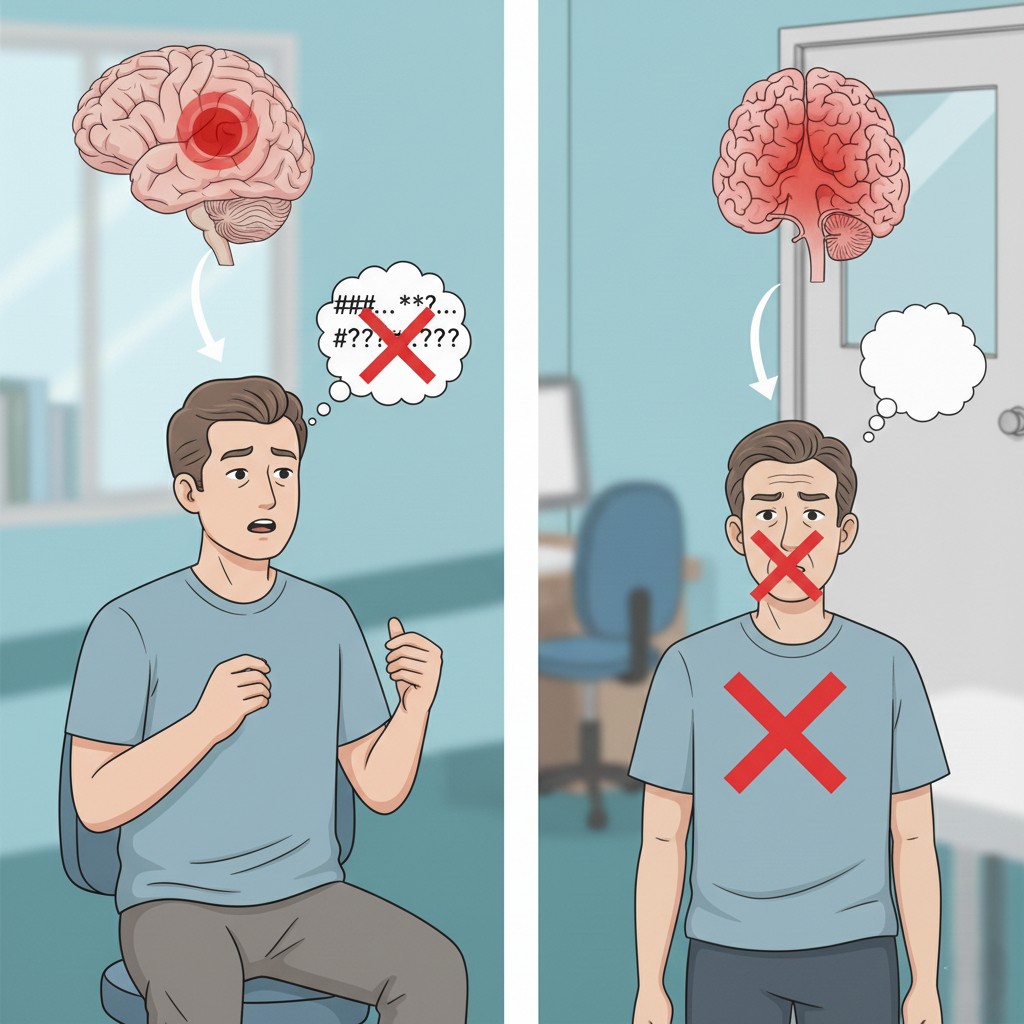
Pure anarthria is classically associated with focal lesions in the left frontal operculum, while more generalized anarthria often points to severe brainstem (bulbar) disease.
Pure Anarthria and Anatomical Correlates
A specific motor disorder of speech production presenting with entirely preserved comprehension of spoken and written language has been termed pure anarthria. This syndrome has a wide variety of alternative names in the literature, including aphemia, phonetic disintegration, apraxic dysarthria, cortical dysarthria, verbal apraxia, subcortical motor aphasia, pure motor aphasia, and small or mini Broca’s aphasia.
Anatomically, pure anarthria reflects damage localized to the left frontal operculum, with notable sparing of the adjacent Broca’s area (which, if damaged, would typically produce broader language deficits).
Associated Conditions and Syndromes
The most common cause of anarthria in clinical practice is advanced bulbar motor neurone disease (or bulbar palsy), where progressive degeneration of the lower motor neurons in the brainstem leads to profound weakness and paralysis of the bulbar musculature required for speech.
Additionally, a condition known as pure progressive anarthria may result from focal neurodegeneration affecting the frontal operculum bilaterally. This specific clinical presentation is often referred to as the Foix-Chavany-Marie syndrome (anterior opercular syndrome).
References
Lecours AR, Lhermitte F. The "pure" form of the phonetic disintegration syndrome (pure anarthria): anatomo-clinical report of a single case. Brain and Language 1976; 3: 88-113
Cross References
Aphemia; Bulbar palsy; Dysarthria
Need Expert Advice on Your Condition?
Get a personalized video breakdown and treatment plan from our senior neurosurgeons using your MRI/CT scans.
👉 Request MRI Review