
Apathy
Definition and Clinical Features
Apathy is a neurobehavioral disorder primarily characterized by a profound lack of motivation and a diminished interest in environmental stimuli. Clinically, it manifests as listlessness, a paucity of spontaneous movement (akinesia) or speech (mutism), and a noticeable lack of initiative, spontaneity, and drive. Patients with apathy often display blunted emotional responses and a reduction in goal-directed behaviors.
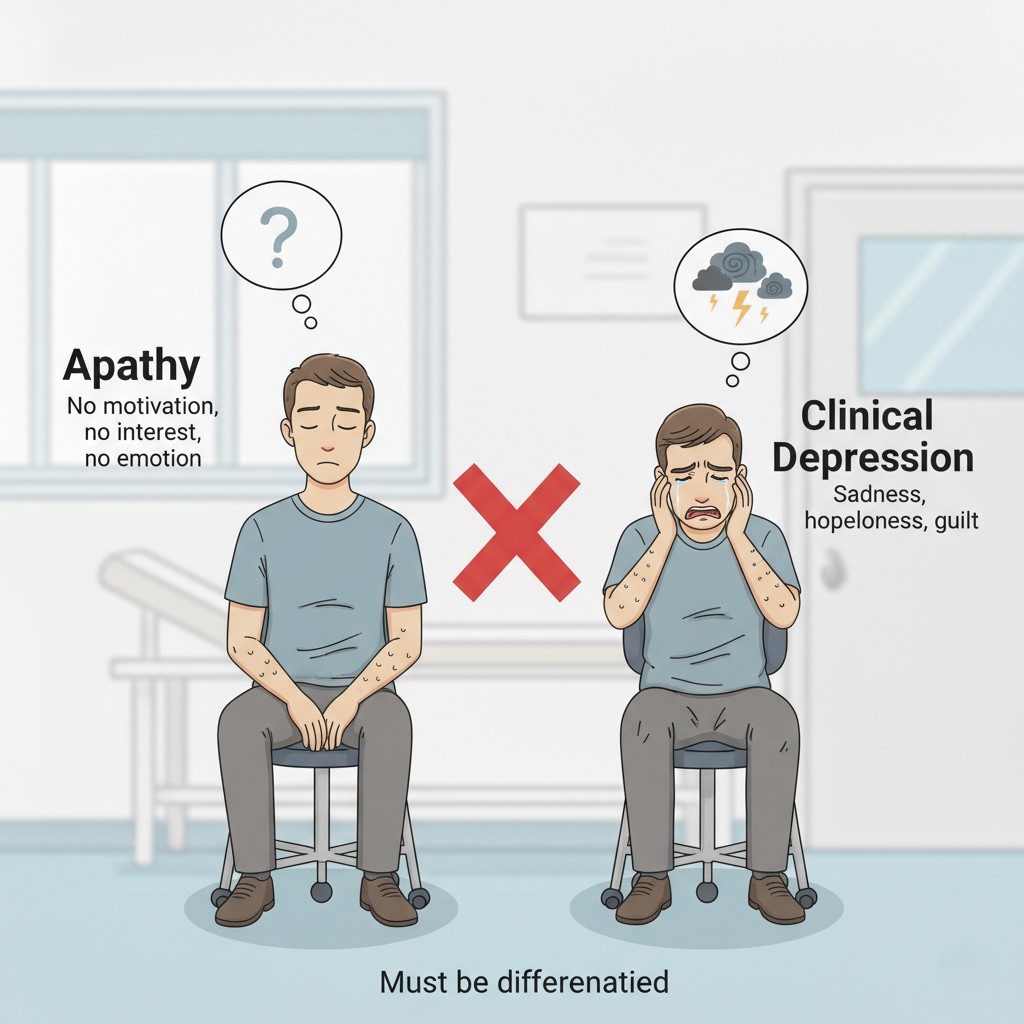
Apathy is a distinct neuropsychiatric syndrome characterized by a profound lack of motivation, interest, and emotional reactivity, which must be carefully differentiated from clinical depression.
Differential Diagnosis
It is crucial to recognize that apathy is a specific neuropsychiatric syndrome, distinctly separate from depression, although the two can coexist. While depressed patients often experience prominent dysphoria, sadness, or guilt, pure apathy is characterized by emotional neutrality and indifference. Furthermore, the diminished motivation seen in apathy should not be attributable to an impaired level of consciousness, emotional distress, or primary cognitive impairment.
Apathy shares many features with the abulic state. It is widely suggested that apathy, abulia, and akinetic mutism represent different points on a continuum of motivational and emotional deficit, with apathy being the mildest form and akinetic mutism being the most severe.
Pathophysiology and Anatomical Correlates
Apathy is classically observed in diseases affecting the frontal-subcortical circuits. It commonly arises from:
- Frontal lobe syndromes, particularly those affecting the frontal convexity or medial frontal regions.
- Multiple vascular insults to paramedian diencephalic structures, including the thalamus, subthalamus, posterior lateral hypothalamus, and mesencephalon.
- Lesions affecting the posterior limb of the internal capsule or the basal ganglia.
Associated Conditions and Treatment
Because it relates to the disruption of deep motivational networks, apathy is frequently associated with "subcortical" cognitive impairments, such as those seen in Huntington’s disease. It is also a very common, sometimes early, feature of Alzheimer’s disease and other forms of dementia.
Beyond neurodegenerative and vascular causes, apathy may be described following amphetamine or cocaine withdrawal, in neuroleptic-induced akinesia (due to dopamine blockade), and in severe psychotic depression. Treatment can be challenging, but pharmacological interventions, including Selective Serotonin Reuptake Inhibitors (SSRIs) or dopaminergic agents, may sometimes be helpful in managing the symptoms.
References
Levy M, Cummings JL, Fairbanks LA et al. Apathy is not depression. Journal of Neuropsychiatry and Clinical Neuroscience 1998; 10: 314-319
Marin RS. Differential diagnosis and classification of apathy. American Journal of Psychiatry 1990; 147: 22-30
Mega MS, Cummings JL, Fiorello T, Gornbein J. The spectrum of behavioral changes in Alzheimer’s disease. Neurology 1996; 46: 130-135
Starkstein SE, Fedorof JP, Price TR, Leiguarda R, Robinson RG. Apathy following cerebrovascular lesions. Stroke 1993; 24: 1625-1630
Cross References
Abulia; Akinetic mutism; Dementia; Frontal lobe syndromes
Need Expert Advice on Your Condition?
Get a personalized video breakdown and treatment plan from our senior neurosurgeons using your MRI/CT scans.
👉 Request MRI Review